The energy transition in Sardinia is not just desirable: it is technically feasible, economically advantageous and environmentally necessary. This is confirmed by the study “Analysis of possible pathways for the energy transition in Sardinia” (Analisi di possibili traiettorie per la transizione energetica in Sardegna), carried out by Politecnico di Milano, the University of Cagliari and the University of Padua, commissioned by Coordinamento FREE in collaboration with Consorzio Italiano Biogas and Italia Solare.
The report examines in detail the outlook for an island whose power sector runs entirely on renewable sources, without resorting to new gas-fired plants or fossil infrastructure.
With a smart mix of solar PV, wind and storage systems, Sardinia can meet its own electricity needs, cut emissions, create economic value and lower the cost of energy for households and businesses.
The model: a “FER100%” scenario by 2030
The study uses the NEMeSI energy model (National Energy Modelling System for Italy) developed by Politecnico di Milano.
In the reference scenario, annual electricity demand in Sardinia in 2030 will be around 8.0 TWh. To meet it entirely with renewable energy, the study envisages:
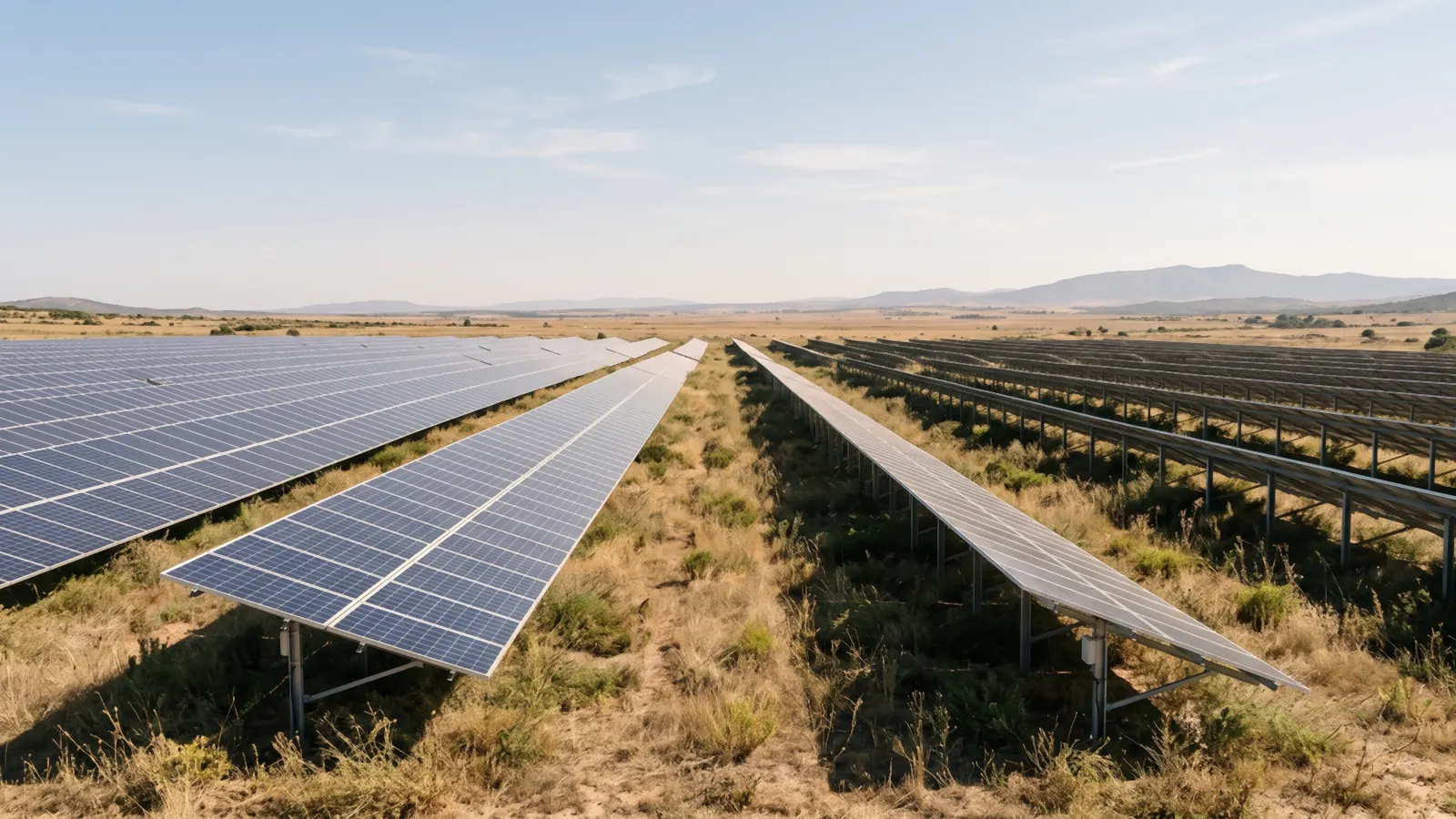
- 7 GW of solar PV, more than two thirds of it from large utility-scale plants and just over 1 GW from self-consumption installations or energy communities;
- 4 GW of wind, more than half of it onshore;
- 14 GWh of storage, mostly large-scale, as planned by Terna-Snam.
FER100% scenario for 2030: planned renewable capacity
14 GWhof storage, mostly large-scale
8.0 TWhof annual electricity demand in Sardinia in 2030
No to the gas backbone: the system can do without it
One of the report's clearest messages is that building the gas backbone pipeline in Sardinia is not necessary. The island's power system can be operated securely and continuously even without new gas-fired plants.
The only envisaged use of fossil fuels concerns high-temperature industrial processes, for which a limited use of around 3.7 TWh of liquefied gas is expected. In any case this is a residual use, which does not justify building a regional gas network.
Lighter bills thanks to renewables
The shift to 100% renewables is good not only for the environment but also for the wallets of households and businesses. According to the NEMeSI model, Sardinia could see its zonal electricity price fall by 39% compared with 2024.
The result? An average saving of around €80 a year for a typical household consuming 2,000 kWh. And the benefits become even more significant with the electrification of household consumption and the spread of heat pumps and electric mobility.
The role of storage and the Tyrrhenian Link
To guarantee the security and stability of the system, the plan provides for:
- BESS (Battery Energy Storage Systems) able to store energy during hours of overproduction (midday) and return it in the evening or on days of low output.
- The Tyrrhenian Link, already under construction: the subsea cable that will connect Sardinia to the mainland, useful for balancing energy flows and exporting surplus energy.
Land and landscape: minimal impact
Moving to a 100% renewable system does not compromise Sardinia's agriculture or its landscape. According to the report's estimates, the area needed to install the plants would be less than 5,000 hectares, under 0.4% of the region's Total Agricultural Area (SAT).
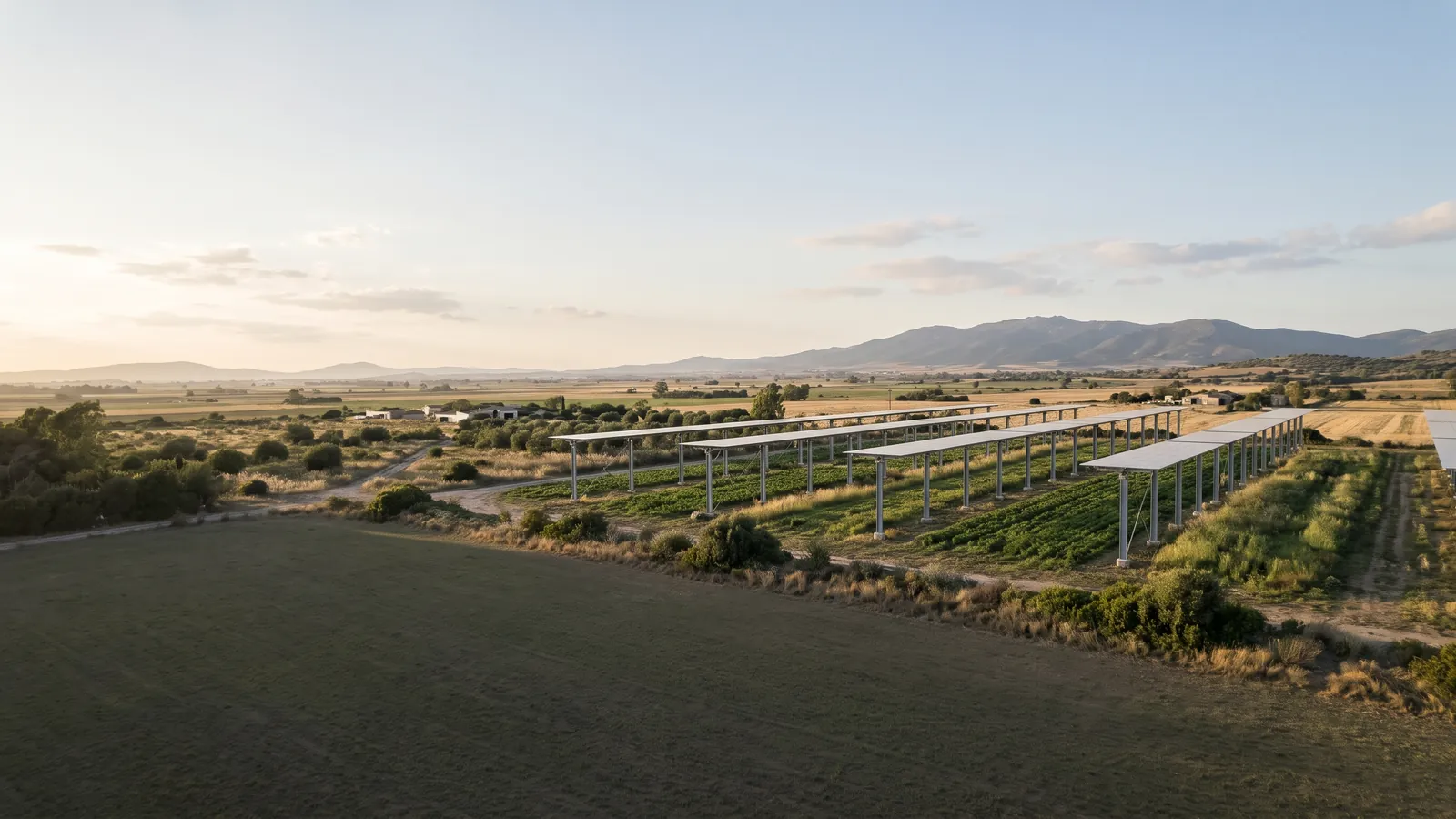
This means the transition can be built without significant land take, and indeed by making the most of practices such as agrivoltaics, which combine agricultural and energy production.
Looking beyond 2030: avoiding pointless investment
The study stresses the importance of not building fossil infrastructure destined to become obsolete within a few years. Sardinia can and must plan a transition that takes the 2050 climate targets into account, avoiding stranded assets and ensuring a resilient, clean and competitive system.
Conclusions: Sardinia has everything it takes to become a European model
Sun, wind, available space, mature technologies and now a concrete technical vision too: Sardinia has all the conditions to become a European model for the island energy transition. Provided that clear and timely choices are made.
To reach the goal, what is needed is:
- Effective spatial planning, with the identification of Suitable Areas (Aree Idonee) and simpler permitting.
- Investment in storage, grids and digitalisation.
- Genuine involvement of local communities, with benefit-sharing models and tools such as Renewable Energy Communities.
- Strong political leadership that aligns regional and national strategies towards a shared, ambitious goal.
Our commitment
At Noraservice we firmly believe that Sardinia should play a leading role in Italy's energy transition. For more than 10 years we have been developing high-quality solar and wind projects, working in synergy with local areas and focusing on innovation and sustainability. Every day we work to build a cleaner, fairer and more independent energy future.
And we are ready to play our part.